
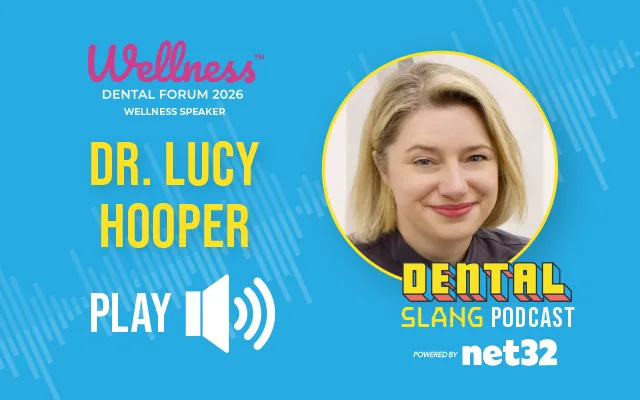
Why Gut Inflammation Shows Up in the Mouth First with Dr. Lucy Hooper

What I learned from Dr. Hooper about reading gut inflammation in the mouth and why a penicillin allergy label deserves a second look.
The line that stuck with me long after we stopped recording came from Dr. Lucy Hooper: "It's not just a window, it's a display." We're used to calling the mouth a window into the body, but a window only lets you look in from outside. Dr. Hooper sees the mouth as the screen in a Tesla, which shows you what's happening and lets you change it, the way you'd switch the air conditioning on or off. Treat the gums, she says, and you can probably turn inflammation on and off too.
I sat down with Dr. Hooper, a London GP and co-founder of Coyne Medical, a prevention-first family practice she built with her husband, Dr. Hugh Coyne, after a career in the NHS convinced her that real prevention needed more than an eight-minute slot.
I came into the conversation thinking about the gut-mouth relationship in one direction only, and I suspect most of us do. Dr. Hooper made the case that it runs both ways. Swallowed oral bacteria shape the gut. Less obviously, and with the evidence still coming mostly from lab studies, immune cells trained in the gut on bacteria like P. gingivalis can travel back through the bloodstream and drive inflammation, and bone loss, in the gums.
Over the hour, Dr. Hooper walked me through why a penicillin allergy label deserves a second look: more than 90% of patients carrying one aren't allergic, and the clindamycin they get instead can alter the gut for years. She also explained how mouth ulcers can appear long before a bowel disease diagnosis, and where saliva testing is headed next. If you've ever wondered what one more open-ended question in the chair could catch, this is where I'd start.
Why a Penicillin Allergy Label Deserves a Second Look
Over 90 percent of patients carrying a penicillin allergy label are not actually allergic, according to Dr. Hooper. The problem is what that label triggers: a switch to an antibiotic like clindamycin, which a recent study found can alter gut microbiome diversity for up to eight years. Penicillin V, by comparison, does far less damage. If a patient's chart carries an unconfirmed penicillin allergy, ask whether they've ever been tested, and consider whether a penicillin-based option is worth revisiting with their physician.
Recurring Mouth Ulcers Can Predate a Bowel Diagnosis by Years
Inflammatory bowel disease, including Crohn's disease and ulcerative colitis, shows up in the mouth for a meaningful share of patients: ulcers, inflammation, lesions that don't track with home care. Dr. Hooper points out that very few of those patients are ever asked about their mouth by the physician managing their bowel disease, even though oral signs can appear well before intestinal symptoms do. If periodontal disease keeps returning in a patient who is otherwise diligent about flossing and brushing, that pattern is worth a flag to a physician instead of another round of the same treatment.
What to Actually Say to a Patient About Their Gut
Dr. Hooper's advice for the exam chair is deliberately simple: ask one open-ended question, “is your gut happy?” or “do you have any problems with your gut?” and then stop talking long enough to hear the answer. She's found that most patients will tell you what's wrong if given the room. The goal isn't to diagnose. It's to signpost, the same way you'd flag anything else you noticed and weren't sure about.
Where Saliva Testing Is Headed Next
Dr. Hooper thinks salivary diagnostics is about to become one of the biggest shifts in how disease gets caught early. She points to a saliva test already used for inherited cancer risk, a saliva test for endometriosis (a condition that still takes close to nine years to diagnose in the UK), and a 2026 study out of Yonsei University that found saliva-based oral microbiome testing outperformed standard stool-based screening for colorectal cancer. Dentists, she points out, are already holding the sample.
Key Takeaways
- Over 90 percent of patients labeled “penicillin allergic” are not actually allergic to penicillin.
- A single course of clindamycin can alter gut microbiome diversity for up to eight years.
- Oral ulcers and unresolving periodontal disease can predate an inflammatory bowel disease diagnosis by years.
- A 2026 Yonsei University study found saliva testing outperformed stool-based screening for colorectal cancer.
- The American Heart Association's newest statement links periodontal disease to the inflammation behind heart attacks and strokes.
About the Author

Dr. Reza Ardalan
Port St. Lucie, Florida