
The Insert Appointment That Goes Wrong
When the final restoration arrives and something’s off, the bite, the shape, the patient’s reaction, the failure usually traces back to one decision made weeks earlier.
Clinical · Latest

This case is proof that the plan you start with is not always the plan you finish with.
When the final restoration arrives and something’s off, the bite, the shape, the patient’s reaction, the failure usually traces back to one decision made weeks earlier.
 Restorative
Your shade match was right. The patient still says it looks fake, and Dr. Susan McMahon can tell you which step lost it.
 Smile Design
Dr. Elaine Halley made an off-hand remark at the end of a lecture on diagnostic accuracy, and the room reacted more strongly than to anything else she had said.
 Complex Cases
You plan the case when the patient has gone home. Dr. Elaine Halley on the one photograph that decides whether that is possible.
 Restorative
She had stopped letting anyone photograph her left side. For ten years, over a restoration with no decay and a sound margin. Dr. Susan McMahon rebuilt it in 45 minutes.
 Complex Cases
To give the lateral a facial path of insertion, Dr. Amanda Seay would have had to cut away the mesial half of a virgin tooth. She found another way.
 Smile Design
He had researched it thoroughly and knew exactly what he wanted. Dr. Elaine Halley on the record that changed his mind without her having to argue.
 Endo
Endo
The fragment was rebonded, the CBCT was clean, and the pulp tested vital. Three months later none of that was true. Dr. William Nudera on what came next.
 Smile Design
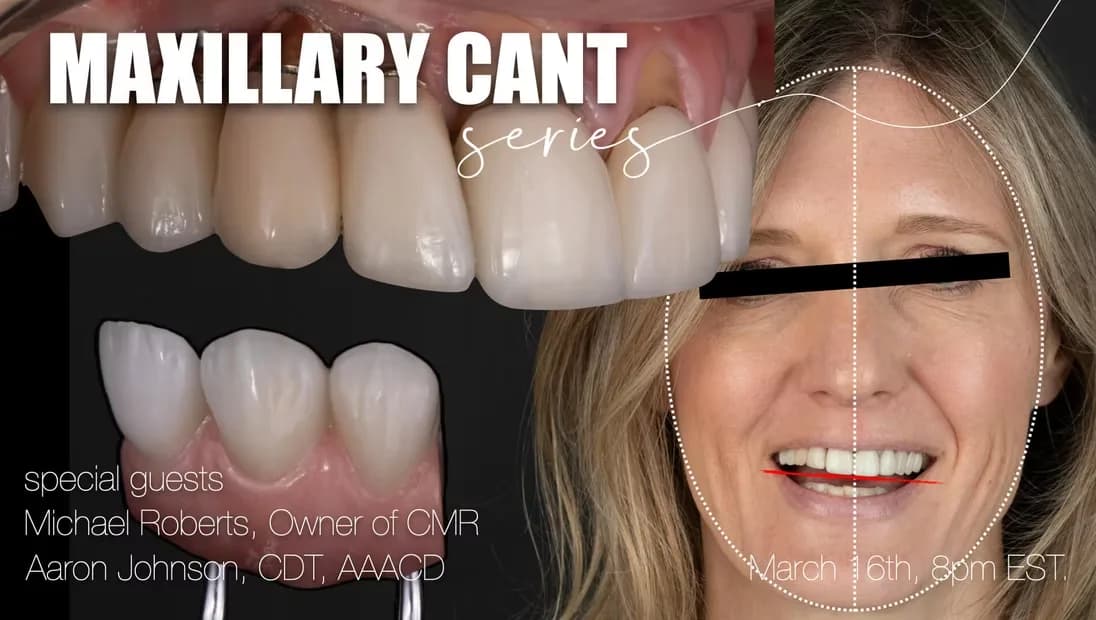
No CBCT, no ortho, no expansion. The asymmetry reached her orbits, and the pupils could not be trusted as a reference.
 Smile Design
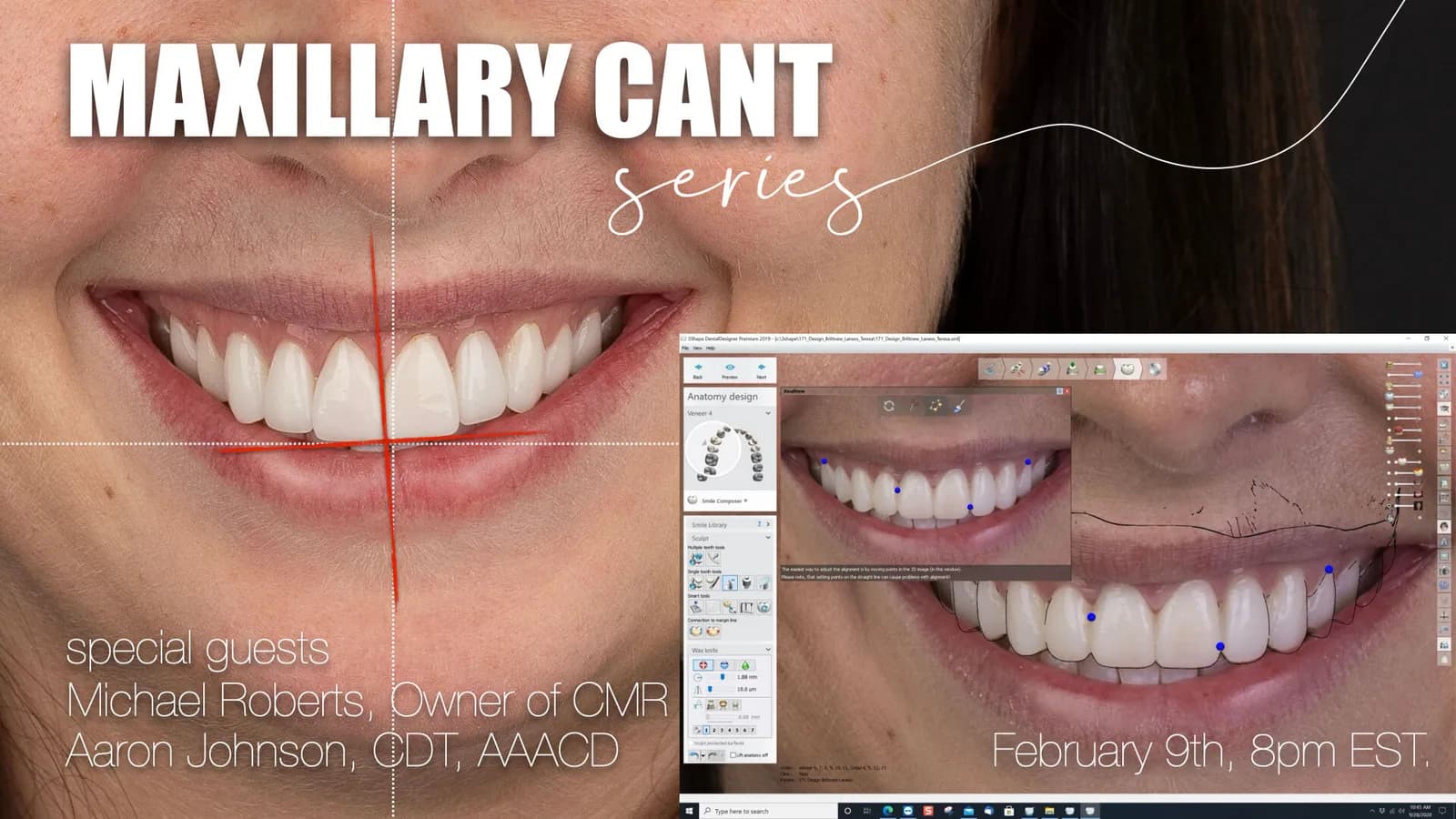
The software will hand you a smile in seconds. Dr. Elaine Halley on what you should be checking it against before you show the patient.
 Complex Cases
Every instinct says level it. Dr. Amanda Seay does the opposite, and shows a maxilla that reads straight without a single bracket. The trick is what the eye reaches for first.
 Endo
EndoThe patient said there was a bump on the gum. It was not a sinus tract. Dr. William Nudera on what was actually coming through the tissue, and where the case is 13 years on.
 Endo
EndoThe abfraction lesion was severe enough that Dr. William Nudera made the call to access a necrotic lateral incisor through its facial surface.
 Restorative
Three preps, three lengths, one clear winner. The Aurum Group shows what each one leaves the ceramist to work with.
 Restorative
e.max or zirconia is the easy half of the question. Which translucency, and where it sits in the tooth, is the half that decides whether anyone can tell.
 Implants
Three steps, and a laser belongs in only two of them. Dr. Amandine Para on which wavelength does what, and the step where reaching for one will cost you the case.
 Endo
EndoThe cone beam said every canal merged into a single portal of exit. What the obturation actually showed was more interesting than that.
 Restorative
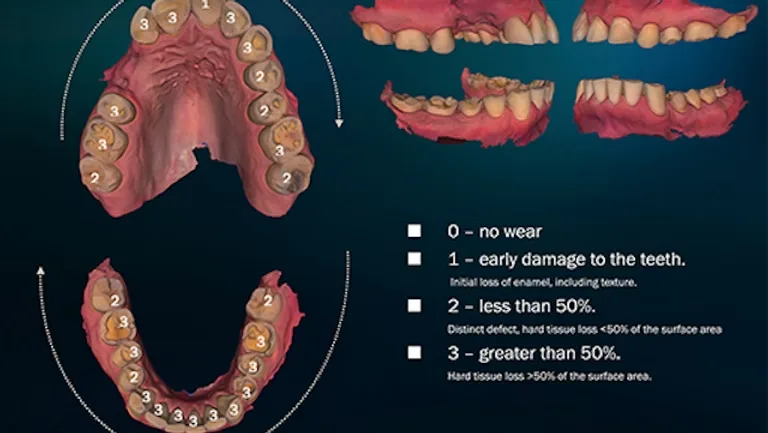
One score per sextant, zero to three, six numbers total. Dr. Andrea Shepperson on the index that turns a vague impression of wear into something you can track.
 Smile Design
You can see when a smile is off. Dr. Elaine Halley on putting it into words, using a concept borrowed from painting.
 Smile Design
He whitened and still thought his teeth looked dull. Dr. Elaine Halley on why the problem was position, not color.
 Implants
Six months to heal, six more to integrate. For that whole year the patient is reminded every time they eat, and they will blame the dentist who placed it.
 Restorative
Attrition and abrasion are physiological until they are not. Dr. Andrea Shepperson on the point where wear stops being age and starts being a diagnosis you owe the patient.