
The 20/80 Rule: What Most Dentists Get Wrong About Patient Experience

Most dentists pour their entire training budget into getting better at the dentistry. I did the same thing for the first three years of my career.
Most dentists pour their entire training budget into getting better at the dentistry. I did the same thing for the first three years of my career. And then I opened my first practice in 2009, sat down to figure out why patients weren’t coming back, and realized I had the math backwards.
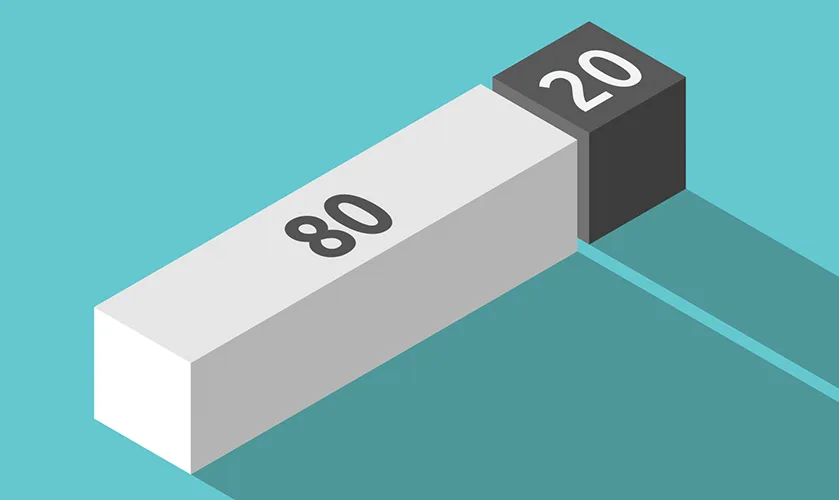
Clinical quality is only 20% of what makes a great patient visit. The other 80% is everything around it. The phone call before the appointment. The wait in reception. The way the treatment plan gets explained. The bill at the end. The follow-up that doesn’t happen. These are the parts of the visit that most dentists either delegate, ignore, or assume will sort themselves out. They won’t. They never have. And in fifteen years of building Pain-Free Dentistry Group from one practice in Glasgow to fourteen across Scotland, I have learned that the 80% is where every patient relationship is actually made or lost.
Why dentists over invest in the 20%
It isn’t accidental. Every system that trains us, certifies us, and reimburses us is built around the clinical 20%. Dental school grades clinical work. Continuing education focuses on clinical technique. Insurance reimburses procedures, not experiences. Even the way we talk to each other at conferences centers on cases, not journeys.
So the average dentist comes out of training believing that if the dentistry is excellent, the practice will follow. That belief is structurally reinforced for decades. And it is wrong. I know it is wrong because I built my early career on it and watched my first practice nearly fail because of it. I was answering the phones, doing the dentistry, filling out the forms, and wondering why patients weren’t referring their friends. The dentistry was fine. The dentistry was always fine. The problem was the eighty percent of the visit I was treating as background noise.
The pain points patients carry into the chair
When I started auditing the patient journey at my first practice, I expected to find one or two big issues. Instead I found dozens of small ones. None of them was catastrophic on its own. All of them together were the experience my patients rated when they decided whether to come back.
The phone gets answered on the fifth ring, not the second. The receptionist sounds tired. The new-patient forms are too long and ask for things the practice will never use. The waiting room television is on a news channel. The hygienist explains the cleaning plan in jargon. The dentist runs ten minutes late and apologizes once. The treatment plan is printed on A4 paper full of dental codes that a patient cannot decode. The post-op call doesn’t happen. The thank-you card after a long course of treatment doesn’t exist.
None of those problems are clinical. All of them are part of the visit. And patients feel every one of them in a way they could not articulate if you asked them directly. What you get back on a survey is a number. What you have actually delivered is a sequence of small frictions that compound into a feeling. The feeling is the experience.
How to audit your own patient journey
The audit is the same one any decent business consultant would run if they were not specifically trained in dentistry. Map every touchpoint a patient has with the practice, from before the first phone call to thirty days after their last visit. Score each touchpoint on a scale you decide in advance. Track which scores correlate with patients who refer friends, return for treatment, and leave five-star reviews. Rinse and repeat every quarter.
At Pain-Free Dentistry Group, we use Net Promoter Score as our anchor metric. It is not perfect, but it gives us one number across all fourteen practices and makes it possible to compare locations honestly. More important than the score itself is the question that follows: for any patient who didn’t give us a ten out of ten, what was the specific friction? Not the polite answer. The real one. We chase that down practice by practice, touchpoint by touchpoint, in small quarter-percent improvements. Half a percent here. A quarter percent there. Multiplied across fourteen practices and tens of thousands of patient visits a year, those small improvements compound.
What to do Monday morning
Pick one touchpoint. Just one. The phone call before the appointment is usually the highest leverage and the lowest cost to fix. Listen to a recording of how your team answers the phone on a busy Tuesday. Listen to ten of them in a row. Then ask yourself, honestly, if that is the experience you would want your mother to have if she were calling a dentist she had never met.
Then pick the next touchpoint, and the next, and audit your way through the entire patient journey one piece at a time. You will not finish in a quarter. You will not finish in a year. The clinical 20% gets the training, but the operational 80% gets the patients. Most dentists never get to the 80% because nobody taught them it existed.
About the Author

Dr. Mark Skimming
Scotland